Publication: International Society of Craniofacial Surgery (ISCFS)
Date: 6 March 2026
Format: Interview
Read the original: Celebrating International Women’s Day 2026 with ISCFS Council Member Dr. Catherine TH Lee, iscfs.org
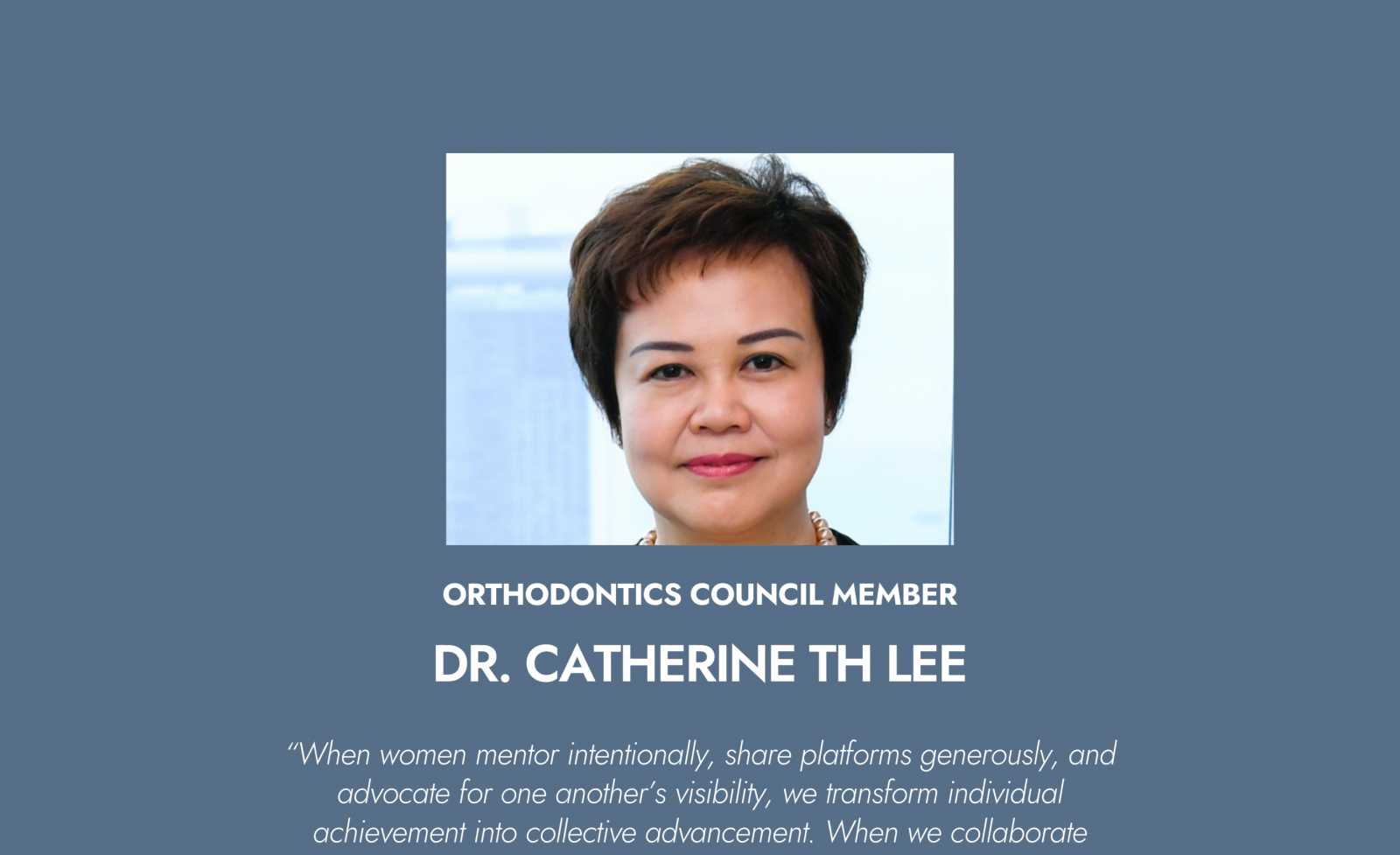
On 6 March 2026, the International Society of Craniofacial Surgery (ISCFS) published an International Women’s Day interview with Dr Catherine Lee, a craniofacial orthodontist practising in Singapore. ISCFS is an international society dedicated to craniofacial surgery. Membership is by invitation, and candidates must have formal craniofacial training, surgical experience, a record of publications and a place in a recognised craniofacial team, so that members are experienced, ethical and actively contributing to the field.
Dr Lee sits on the society’s council as Council Member for Orthodontics, making her the only council member representing craniofacial orthodontists globally. In the interview, she talks about her clinical training in Adelaide, Sydney and New York, the mentors who shaped her approach to cleft and craniofacial care, and why craniofacial orthodontics remains a rare subspecialty with few structured training pathways worldwide.
ISCFS published the interview on the same day as one with its President, Professor Irene Mathijssen.
What Dr Lee discussed
- Technology in craniofacial orthodontics. Dr Lee has brought 3D digital workflows and artificial intelligence into her treatment planning, which she describes as improving precision and widening what is possible for patients.
- Her training lineage. Her fellowship in New York placed Dr Lee under Dr Barry Grayson, Dr Joseph McCarthy and Dr Court Cutting, the clinicians who pioneered craniofacial distraction osteogenesis and nasoalveolar molding with gingivoperiosteoplasty.
- Singapore collaborations. Dr Lee credited two long-standing collaborators in integrated craniofacial care: Emeritus Professor S. T. Lee at Singapore General Hospital and Professor T. C. Lim at National University Hospital.
- Why the subspecialty is scarce. Craniofacial orthodontics is under-recognised even within orthodontics, Dr Lee noted, with few structured training pathways worldwide and a global shortage of practitioners.
- The orthodontist’s role in surgical planning. A craniofacial orthodontist does far more than align teeth, Dr Lee explained. The role reaches into surgical sequencing and into simplifying the reconstructive stages for the wider surgical team.
- Multidisciplinary teams. Dr Lee’s advice to younger clinicians is to join a team early, because craniofacial reconstruction unfolds over years rather than in a single procedure.
- Training the next generation. Fellowship programmes, workshops, clinic observerships and mentorship are how the subspecialty grows, Dr Lee argued, framing the point around the ISCFS 2026 theme #GiveToGain.
“Innovation keeps the field dynamic, and it keeps me evolving as a clinician.”
Dr Catherine Lee, ISCFS International Women’s Day interview, March 2026
About Dr Catherine Lee
Dr Catherine Lee is a craniofacial orthodontist with over 25 years of experience, practising in Singapore since 2002. She is Council Member for Orthodontics at the International Society of Craniofacial Surgery, the body that published this interview.
Full biography, qualifications and appointments: About Dr Catherine Lee
Read the full interview
The complete interview is published on the ISCFS website: Celebrating International Women’s Day 2026 with ISCFS Council Member Dr. Catherine TH Lee
Read more here.
Dr Catherine Lee treats children and adults with cleft lip, cleft palate and craniofacial conditions in Singapore and Kuala Lumpur. See cleft and craniofacial treatment or book a consultation.